Friday, September 18, 2026
FUNGIFUTRE : Mycelium Paper - Transforming agricultural residues into mycelium-based paper
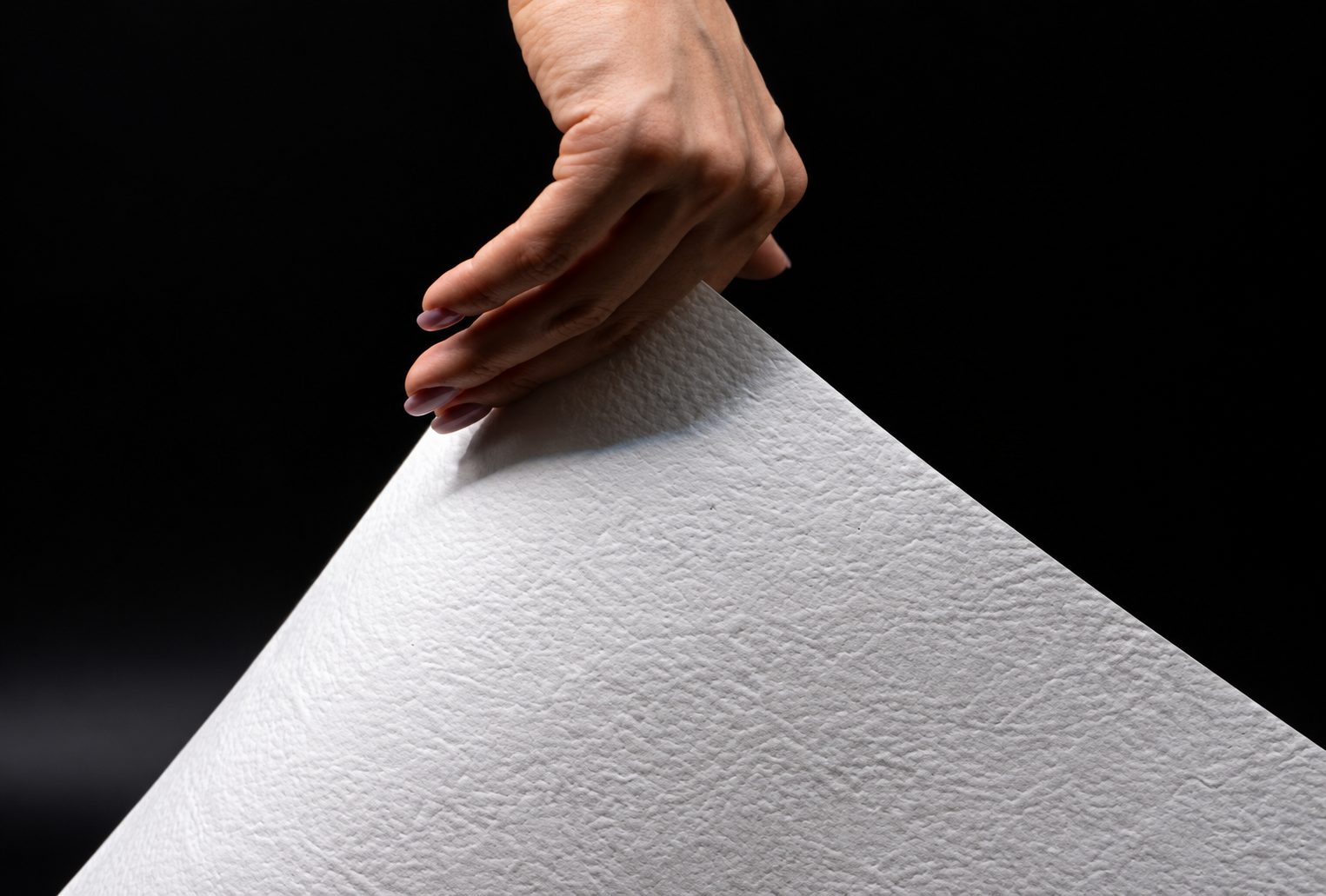
An alternative to wood pulp that transforms agricultural residues through mycelium fermentation
Mycelium Paper develops a material for packaging and paper applications using agricultural residues, including straw and bran. The process is based on mycelium fermentation and offers an alternative to the wood pulp used in conventional paper production.
Already commercialised, the solution combines a mono-material structure, a binder-free process and a compostable end of life.
Agricultural residues as a raw material
Mycelium Paper uses agricultural residues as a substrate for mycelium growth.
The resulting material is made from 100% mycelium, with no added plastic, adhesive or chemical binder. This approach replaces wood pulp while giving value to agricultural residues that might otherwise be burned.
The material also has a naturally velvety texture and can incorporate embossed effects, while retaining the visual and tactile qualities sought after in premium packaging.
A fermentation-based process
Unlike conventional paper manufacturing, the process does not rely on high-temperature alkaline cooking or chlorine bleaching.
The mycelium is grown on agricultural residues in controlled fermentation chambers at temperatures between 25 and 30°C.
According to Mycelium Paper, the process reduces:
- energy consumption by 60%;
- water consumption by more than 80%;
- CO₂ emissions by 75% compared with conventional paper.
Biomass and substrate residues generated during production are then composted and turned into organic fertiliser.
A solution designed for packaging
The material can be used to create one-piece structures without glue, reducing the need for additional inserts or dividers.
It is compatible with existing paper converting processes, including cutting, embossing and lamination, without requiring modifications to the relevant production lines.
Formats can also be designed flat and assembled on demand, helping to reduce storage volume.
Production already at industrial scale
Mycelium Paper reports a production capacity of 3,000 tonnes per year, corresponding to a TRL 9 level of maturity.
The current production cycle ranges from 10 to 14 days, with ongoing R&D aimed at reducing it to seven days.
Raw materials are sourced primarily from farms located within a 50 km radius of production sites, helping to keep sourcing close to manufacturing.
A remouldable and compostable material
After use, Mycelium Paper can be remoulded with water and then dried to create new parts. According to the company, the material can undergo at least three reuse cycles before degrading.
At end of life, its mono-material composition eliminates the need to separate different components. The material is described as home compostable and biodegradable within 90 days, allowing it to return to organic matter.
An approach combining agricultural residue valorisation, biofabrication and mono-material design to offer a new pathway for paper-based materials.